|
|
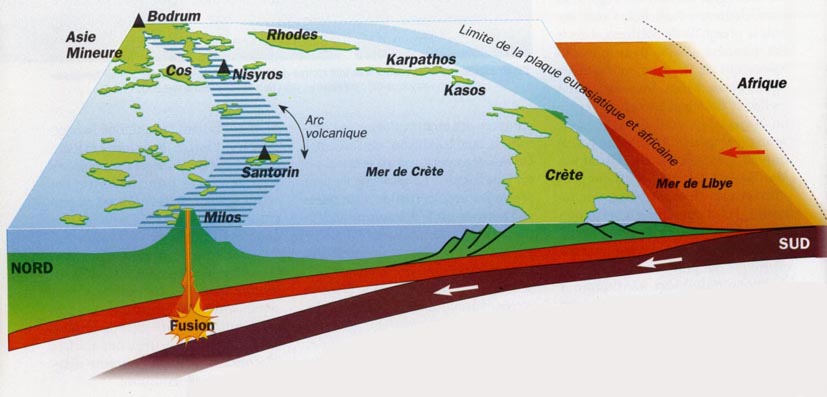
Milos is on the Eurasian tectonic plate, which for almost 25 million years has been undermined by the African plate descending at a rate of 2.5 cm each year at an angle of 35o. Where the floor of the Sea of Libya (in brown) meets the floor of the Sea of Crete (in orange) the tectonic fusion activity (in white) has forced up an arc of volcanoes that extend through the Cyclades to Attica on the Greek mainland.
|
|
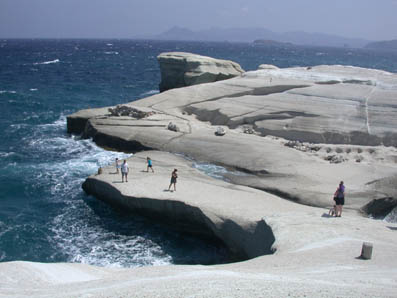
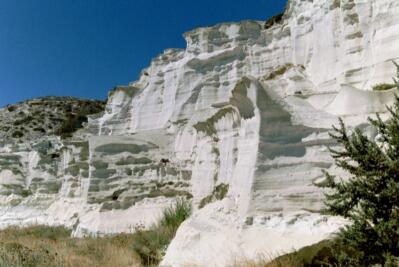
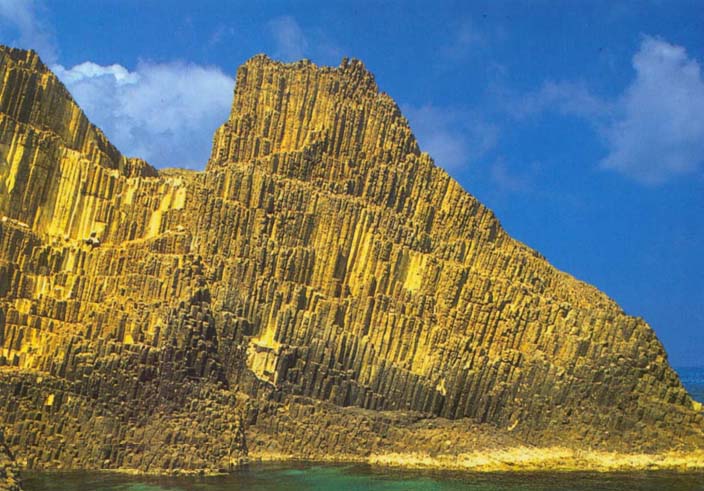
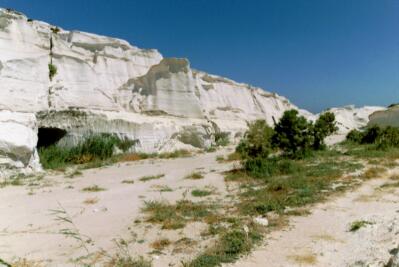
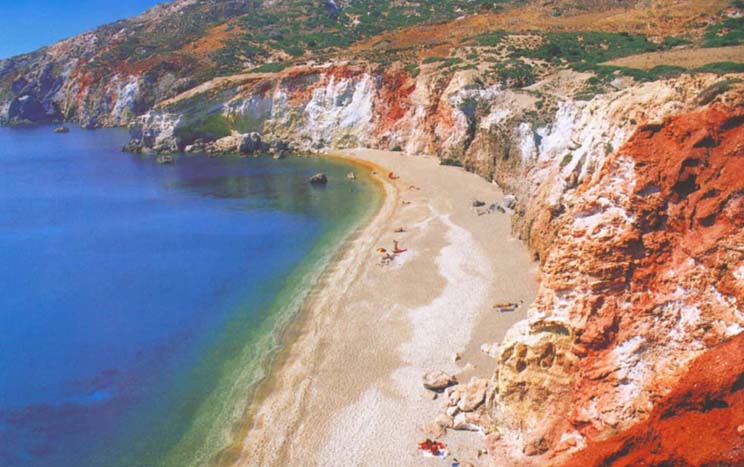
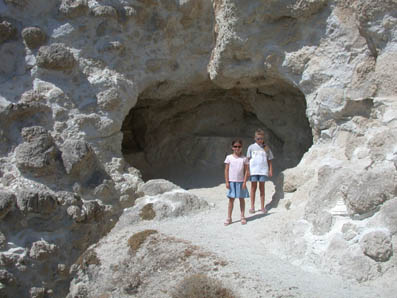
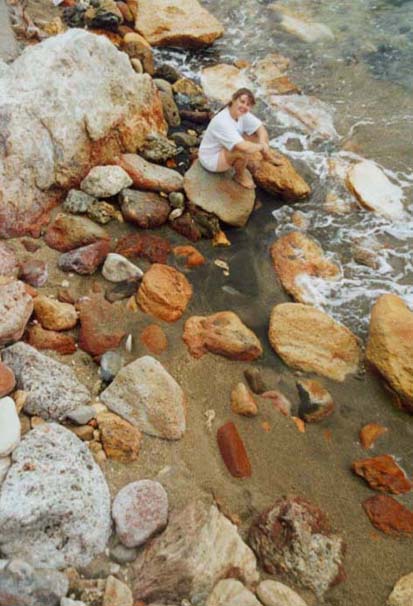
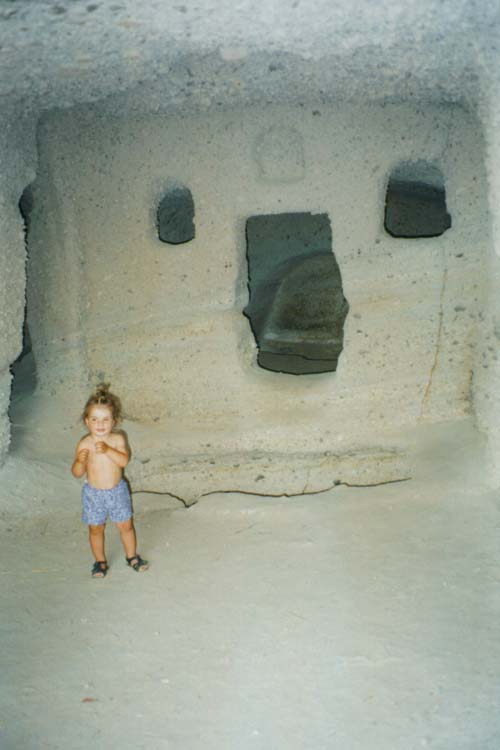
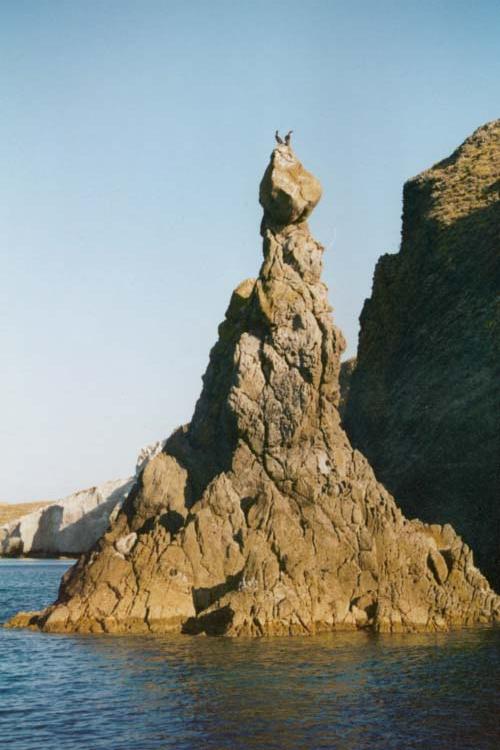
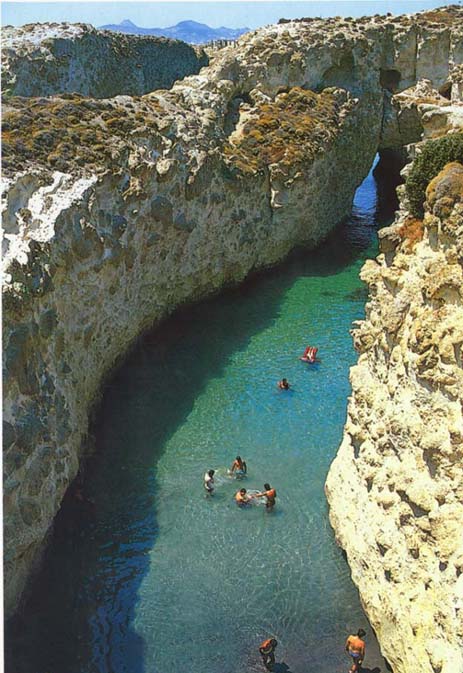
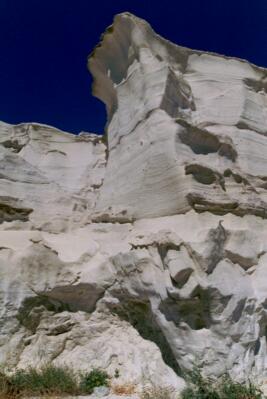
The results of these upheavals can be seen in the geological features of multi-colored rock formations to be found in the cliffs, ravines and mountains of Milos. Here are some typical examples:
 |
 |
 |
 |
 |
 |
Click on the pictures to entlarge !
 |
 |
 |
 |
|
 |

 |
|
|
In the main port of Adamas there is the new Museum of Geology. For those interested it is a 'must'. It can be found at 800m from the main square on the road to the airport. It is a good idea to visit the museum at the beginning of your holidays because the exhibits feature many places and items of interest, clearly described, that can be found on the island. In common with many Greek museums Sunday visiting is free and there is excellent access for the disabled. |
|
THE
FOLK (ARTS AND HISTORY) MUSEUM
Milos is famous throughout the world as the place where the 'Venus de Milo' (Aphrodite) was found by a farmer in the early 19th century. A full sized replica (the original is in the Louvre) is on show together with other archaeological finds and conserved icons.
© 1999 Lapaire Jean-Marie - last modif.: 13.04.2006